Shun Wu Tang History
“Shun Wu Tang” is the Kung Fu system of the SU family, based on Southern Shaolin Luo Han Quan. It was introduced to South Africa by Grand Master SU Jin Miao in the mid-1980s, and to France by Shi Bo Christian in 1997.
Luo Han is considered the oldest documented Kung Fu style. Historical records trace its origins back more than 1,000 years, placing Luo Han Quan during the time of the Shaolin Temple in the 6th century.
The name “Luo Han Quan” comes from the 18 legendary Luo Han (Arhats in Sanskrit — enlightened Buddhist beings who have attained Nirvana). These Shaolin warrior monks were said to have begun as bandits before converting to Buddhism. Through deep devotion and discipline, they became enlightened and reached Nirvana.
Each of the 18 warriors was already a skilled martial artist before entering Shaolin. They became protectors and warrior monks of the temple. Their unique combat methods contributed to the earliest documentation of Shaolin fighting systems — the famous Luo Han.
Their martial skills and individual specialties were preserved over time. To this day, 18 statues representing them still stand at the Shaolin Temple in northern Henan.
This fighting system was passed down through generations of disciples, developing and evolving into many other styles. Numerous legends describe the spread of Luo Han throughout mainland China and eventually to other parts of the world.
One legend recounts that during the destruction of the temples by the emperor, many Luo Han fled and dispersed across different regions. Some arrived in Taiwan, where many traditional Kung Fu masters still reside. Others fled to Okinawa, where Luo Han influenced the development of Karate. Others spread throughout China and beyond — to Korea, Japan, the Philippines, and other regions.
Taiwan was historically considered a place of exile. For this reason, it was not uncommon for great masters to change their names and the names of the styles they taught in order to avoid persecution. This helps explain the overlap between many styles today and the difficulty in accurately tracing their origins.
In its earliest form, Shaolin boxing was represented solely by Luo Han Quan, making it the foundation of all styles influenced by Shaolin boxing. Many modern Kung Fu styles include techniques named after Luo Han or contain forms called Luo Han Quan, such as Tang Lang (Praying Mantis), Hung Gar, Mi Zhong, Choy Lee Fut, Lama Pai, and many others.
Luo Han Quan also forms the foundation upon which styles such as Seven Star Praying Mantis, Tai Tzu Quan, Wu Xing Quan (Five Animals), Ngo Cho (Wuzu, Five Ancestors), and Pa Kua were developed. The founders of these systems were all trained in Luo Han Quan.
Today, Luo Han exists in both Northern and Southern Chinese versions.
There is a Luo Han Quan lineage from Monk Miaoxing (1881–1939), composed of 18 methods (Shiba Fa): 6 fist techniques, 2 kicking methods, 1 elbow method, 4 leg methods, and 5 grappling/Qin Na techniques. This version is likely a relatively recent framework derived from an older Luo Han system.
Another Luo Han Quan lineage comes from Monk Yuantong and was taught at Jingwu Tiyu by Sun Hui Yufeng. This system includes 18 forms: 6 soft, 6 intermediate, and 6 hard.
There is also a Luo Han Quan lineage from Monk Yang Ji’e (late 1800s–1972), who survived the destruction of 1928 and later taught in Shanghai. His disciple Sun Tongwei (also an expert in Baguazhang) transmitted the system to Zhu Jiemin (1954–). This lineage includes 12 Tantui and 3 main forms: Wuhuquan (beginner), Liuhequan (intermediate), and Gongliquan (advanced), along with extensive Qin Na, Tuishou, and Jing training. It is often considered both an “internal and external” style.
Finally, there is a Luo Han Quan tradition from Fujian Province, primarily using Southern Shaolin techniques and characteristics.
Its forms include the 68 Luo Han techniques, 88 Luo Han techniques, and 108 Luo Han techniques. It also incorporates hard Qi Gong and conditioning methods such as the “Black Hand of Luo Han” (Luo Han Heishou). This version spread to Guang Kou in Taiwan, throughout Southeast Asia, and eventually worldwide.
The Southern style mentioned above is the Luo Han Quan system taught in the Shun Wu Tang schools.
Originally, the SU family practiced the Hokkien style “Tai Tzu.” This system was transmitted through generations of the SU family.
The Shun Wu Tang martial art was introduced to Taiwan by the first-generation elder Lou Loong. Around 1850, Master Lou Loong developed this martial system in Taiwan, directly based on the 18 Hands of Luo Han from the Shaolin Temple. Very little is known about this Master or about Shun Wu Tang before its arrival in Taiwan.
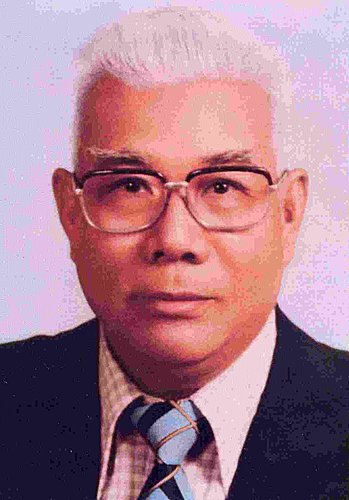
The second-generation Master was WU Chi, who resided in Taiwan. Master SU MO (third generation) was the father of our current Master.
Grand Master SU MO is credited with merging the SU family Tai Tzu system and the Shun Wu Tang system learned from Master WU Chi, forming the Shun Wu Tang system practiced by the SU family today.
Master WU Chi transmitted the Shun Wu Tang martial art to Grand Master SU MO, who then formally established its teaching. To this day, the SU family continues this tradition in Taiwan and in various parts of the world through its students.
The traditional art forming the foundation of Shun Wu Tang schools is the Luo Han system. As you can see, our style is a successful combination of Northern and Southern influences, unified by Grand Master SU MO.
Family systems are always marked by their own distinctive “signature.”
Within all of our Luo Han forms, the opening of the “Luo Han Quan” is identified by six specific movements unique to Shun Wu Tang — the SIGNATURE of the SU Family.
In other Luo Han systems, and in most traditional systems, a recognizable hallmark known as the “opening of the door” is always clearly present. For an experienced practitioner, this opening can reveal the origin of the style and the family lineage behind it.
Shun Wu Tang is a composite style. It applies principles from both hard and soft systems, internal and external methods, Yin and Yang. It is a family system passed down from generation to generation, primarily preserved by the SU family residing in Taiwan. The meaning of “Shun Wu Tang” is the art of continuous combat.
All martial arts have equal value. The true difference lies in the level of mastery achieved by the practitioner within their own style. And to reach such a level of excellence requires tremendous dedication and work in every aspect of training.


